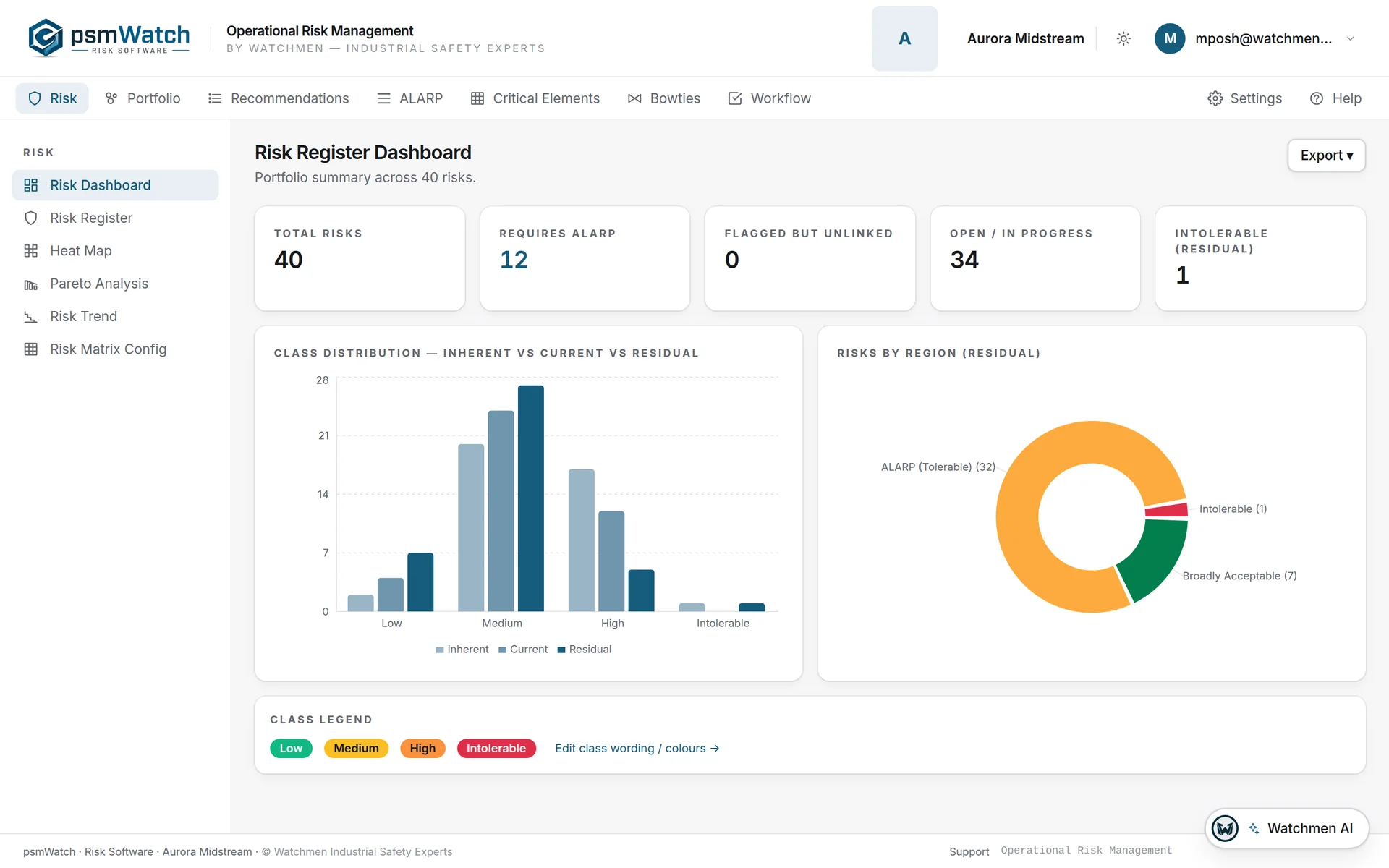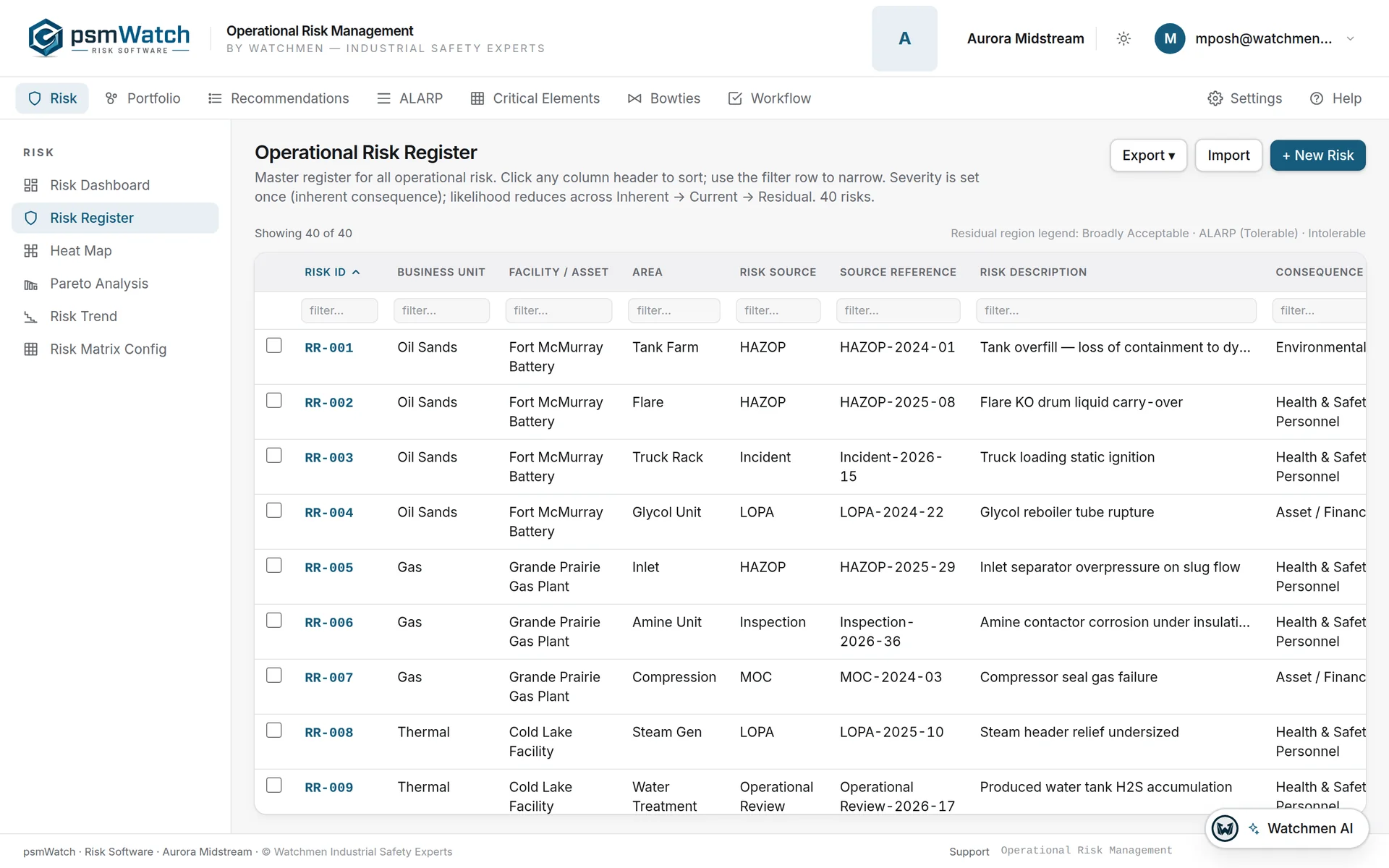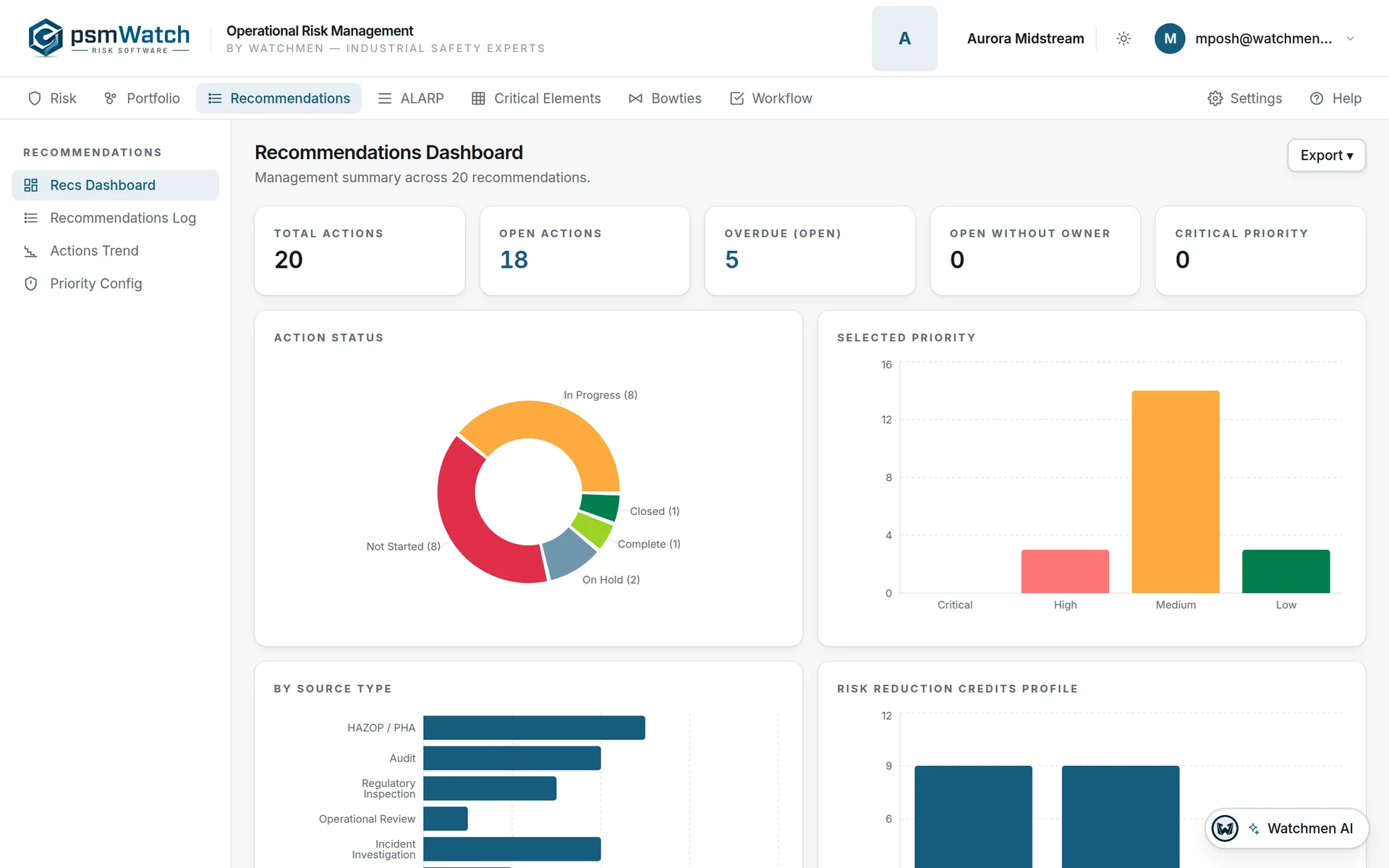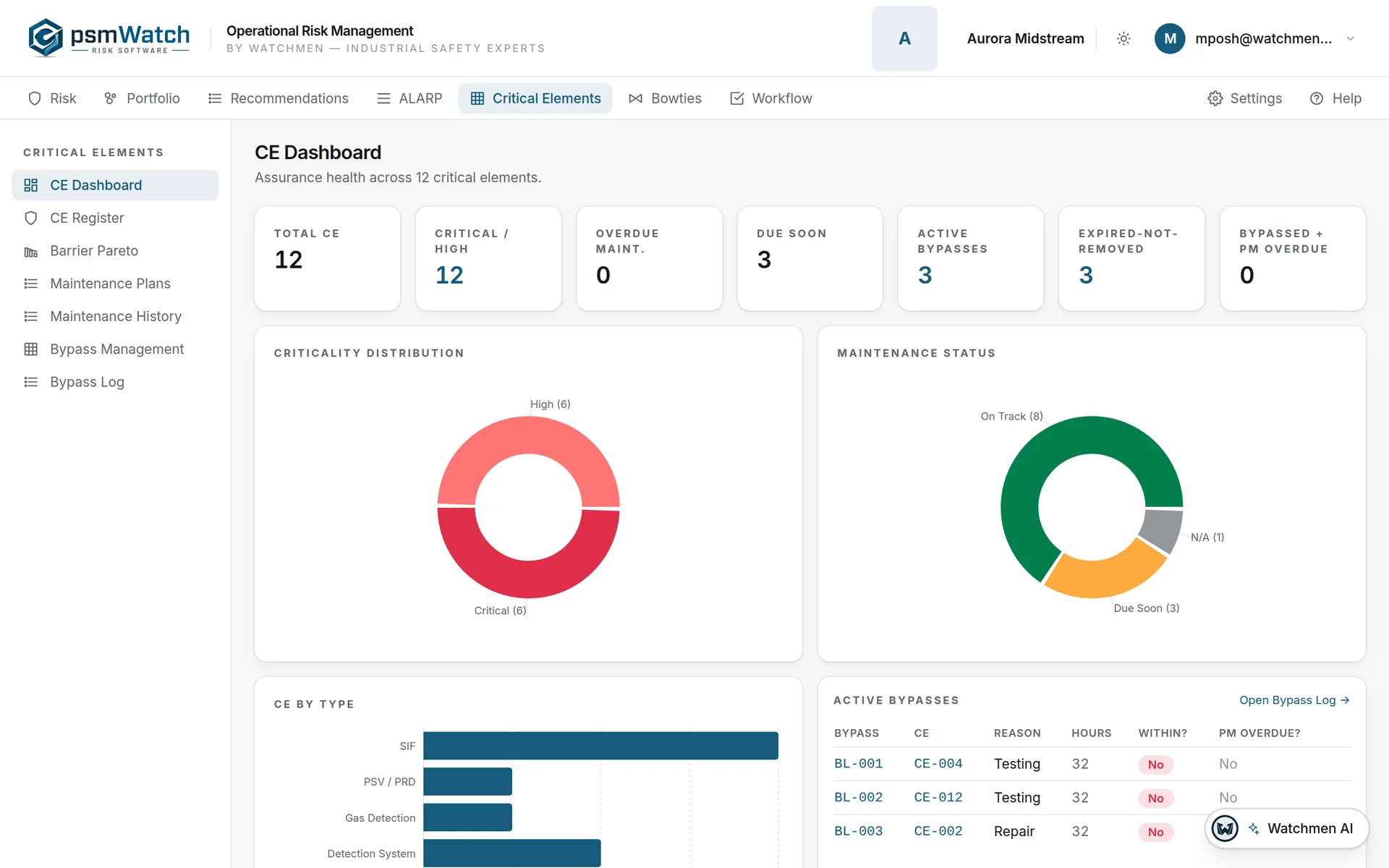

psmWatchTM centres your operation on a living operational risk register. Bring data in from any study or source, then drive critical element management, recommendation tracking and defensible ALARP justification from one secure source of truth. Your PSM data works for you instead of collecting dust on a shelf.
Operations invest heavily in hazard and risk studies. Then the findings sit in a PDF that nobody opens until the next revalidation, the recommendations drift through spreadsheets, and the barriers the study relied on are bypassed with no one checking the plan. psmWatchTM keeps that data alive and connected.
Scenarios, safeguards and recommendations are locked in a document. Nobody can ask the study a question, and the next revalidation starts from scratch.
Import the worksheet from any PHA tool. Scenarios that share a consequence become one risk with many causes, each cause keeping its provenance. The study is now data you can filter, chart and act on.
The matrix says this band should drive action, but the analysis is hard, so the risk is treated as green or passed to management to sign off.
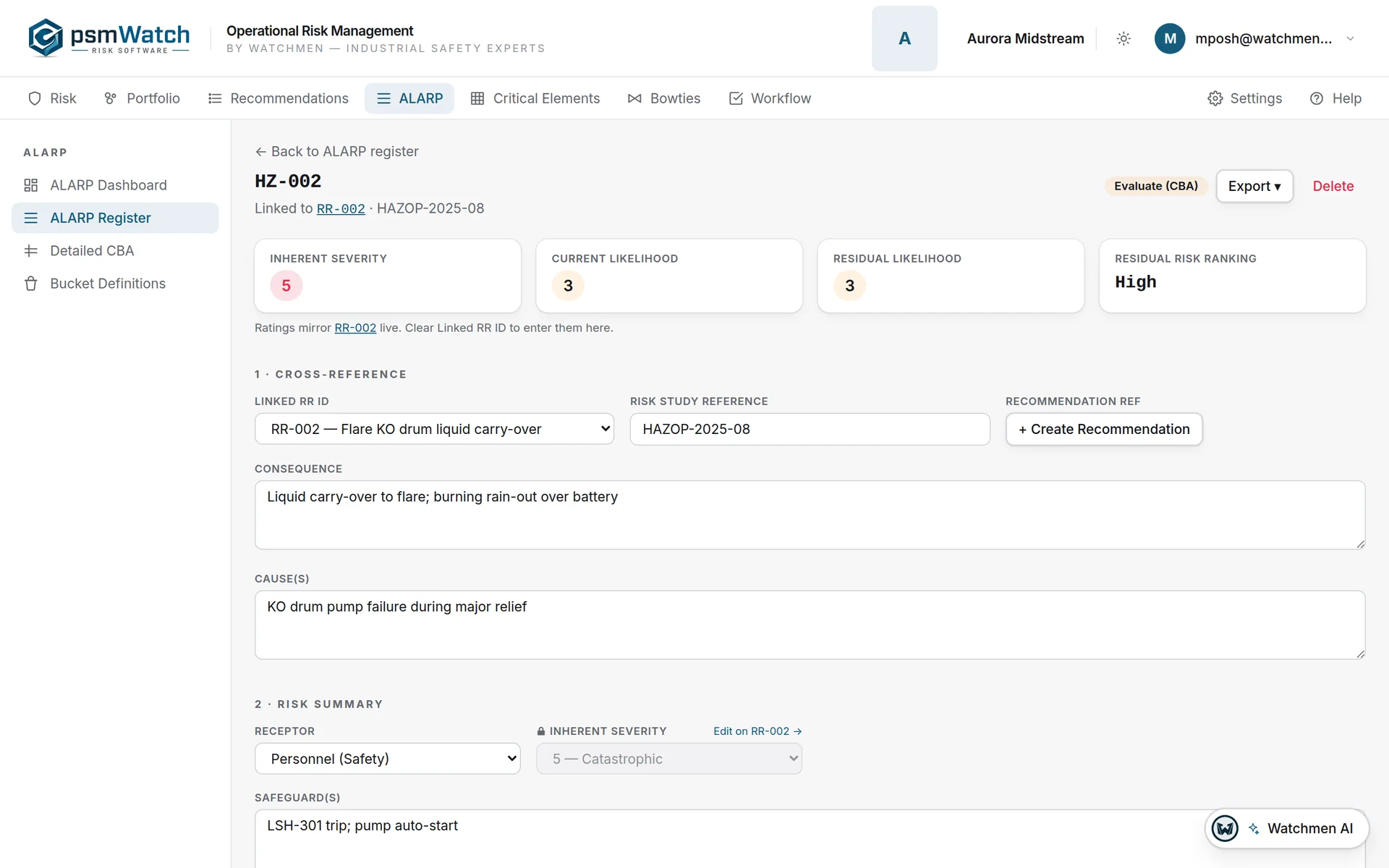
Screening, cost benefit analysis, decision and justification take minutes, are stored against the scenario, locked to the matrix and fatality value in force at the time, and print as a report on demand.
Hundreds of actions across studies and facilities, ranked by whoever shouts loudest, with overdue items discovered at the audit.
Every recommendation has an owner, a due date, an approver and closure evidence. Priority is scored from the risk it treats, so the order of work follows the risk.
A trip is defeated at 2 a.m. with no pre-agreed limit, no compensating measures on record and no link back to the scenario it protects.
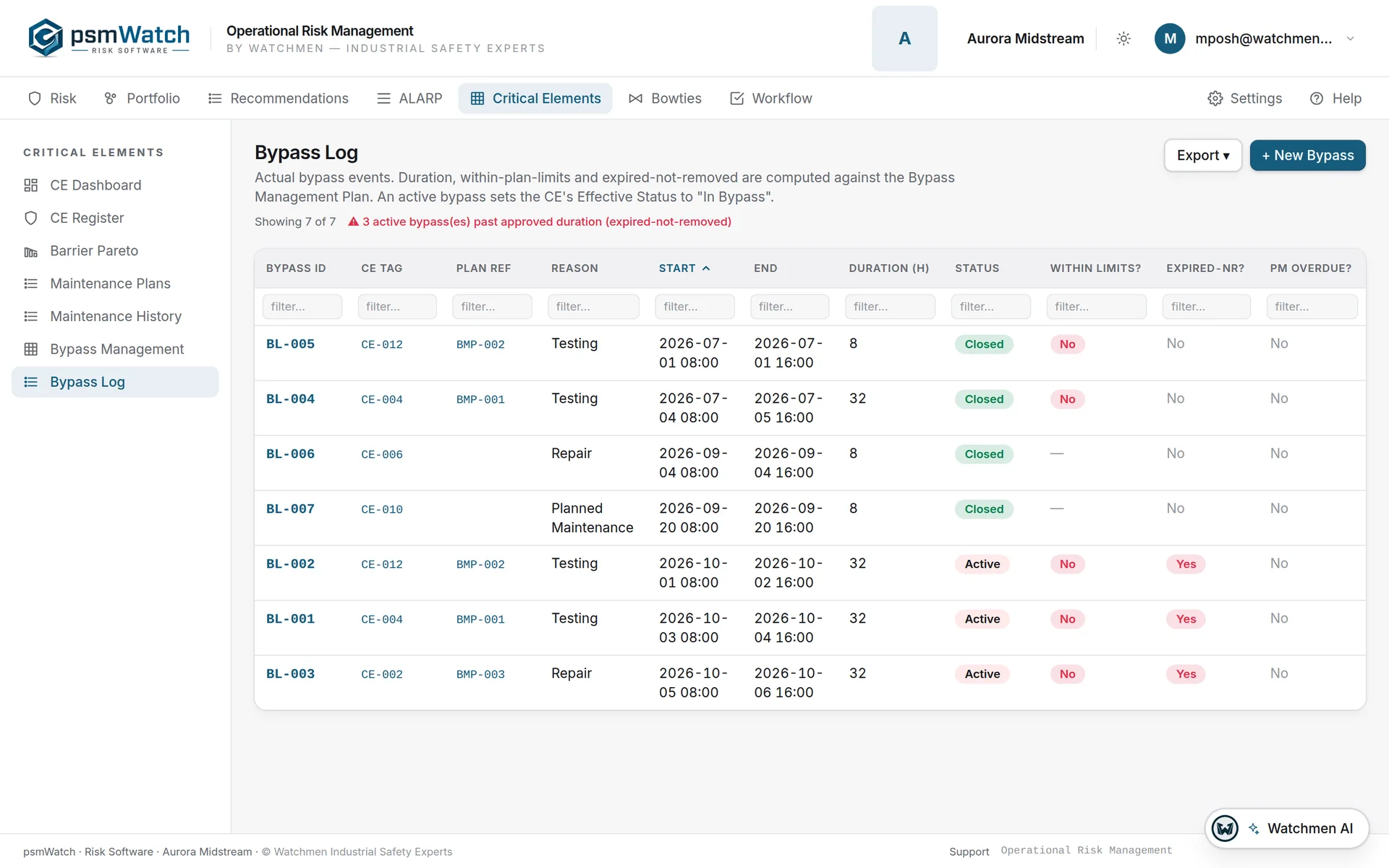
Each critical element has a pre-approved bypass plan with a maximum duration and compensating measures. Live bypasses are checked against it, routed for approval, and expired-not-removed events are flagged.
Data from any study or source flows into one living register. Recommendations, critical elements and ALARP justification build on it, and analytics and risk-informed decisions flow back out to the people who need them.
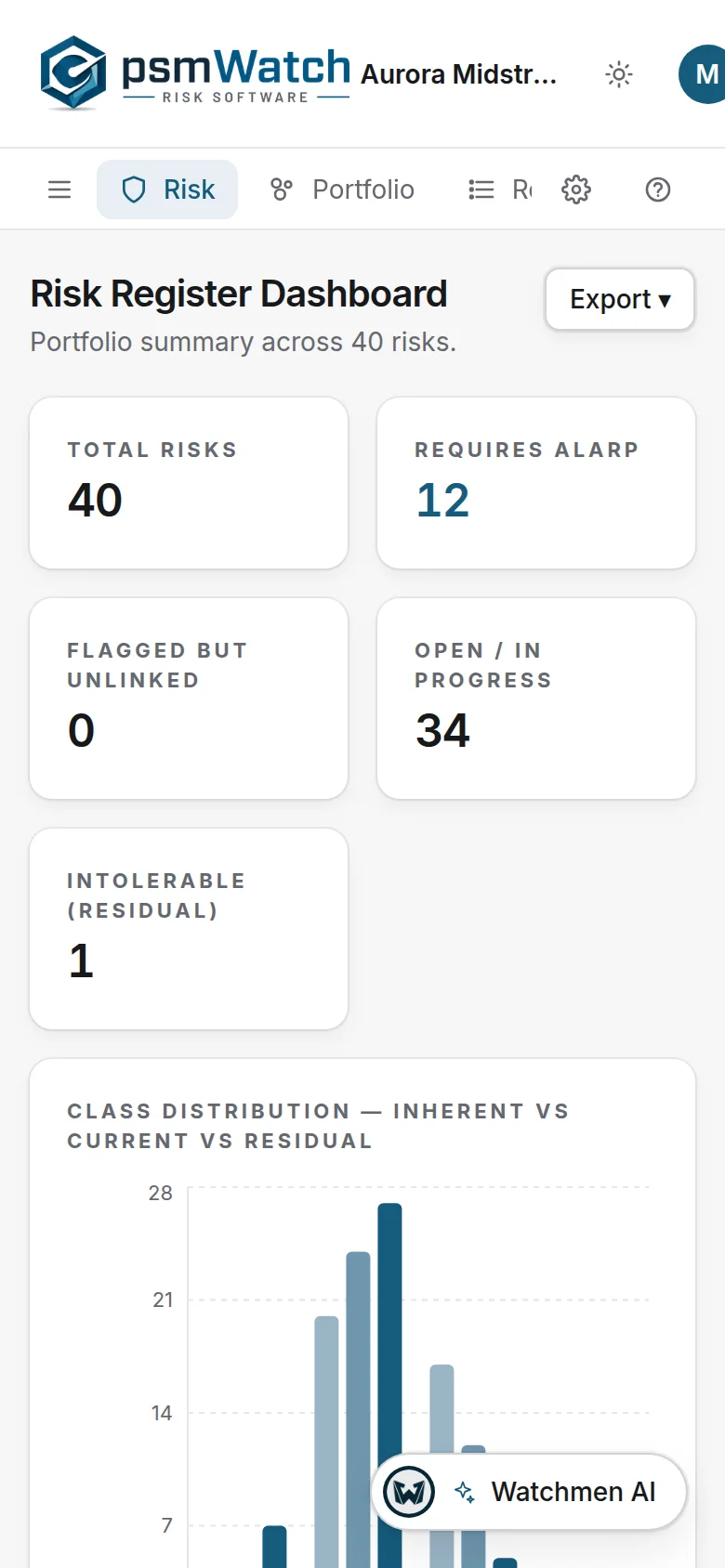
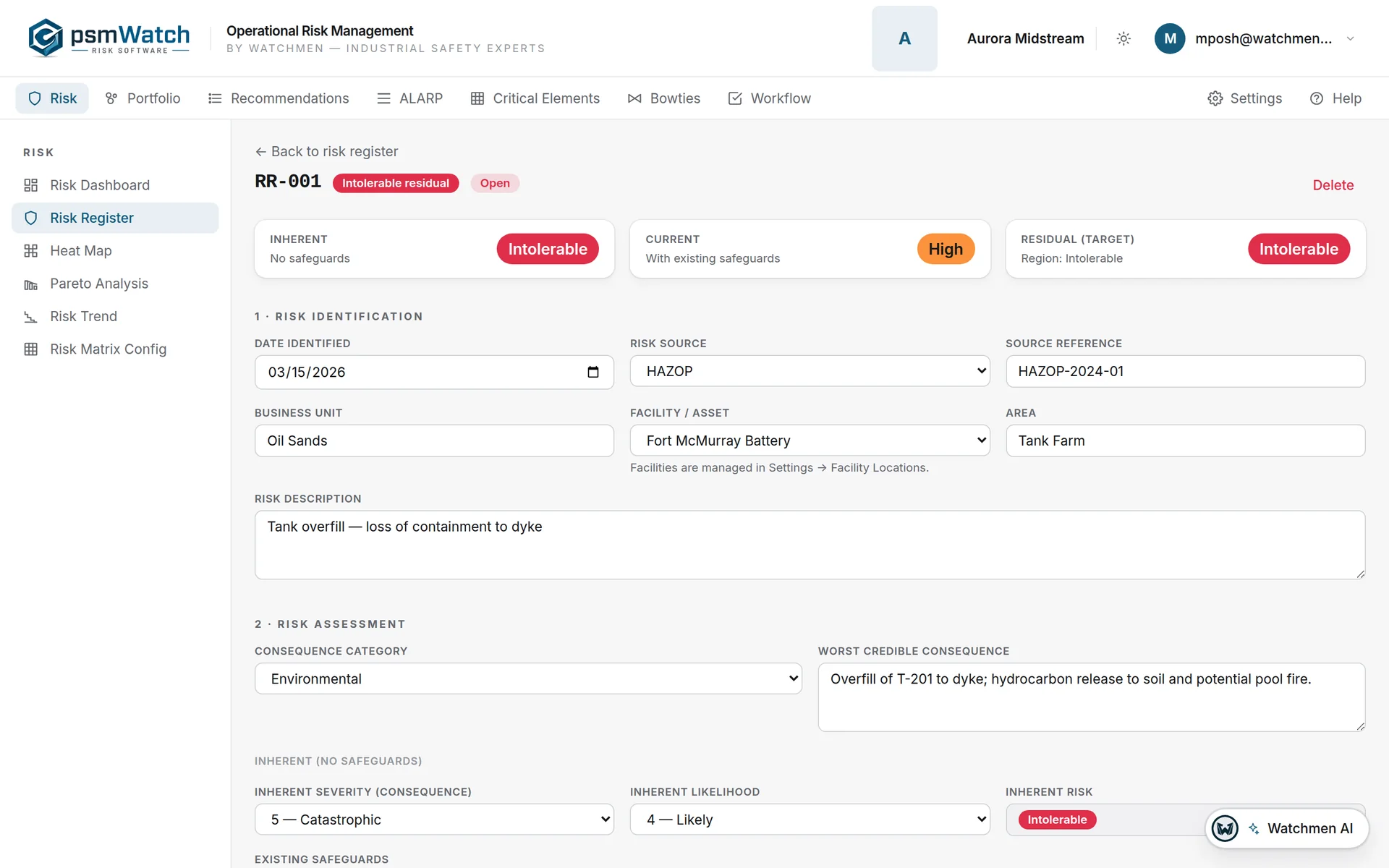
The heart of psmWatchTM. A living, enterprise-wide record of operational risk across all your facilities, ranked against your own matrix, that every other module builds on.

Turn study recommendations into tracked, owned, prioritised actions across every facility.

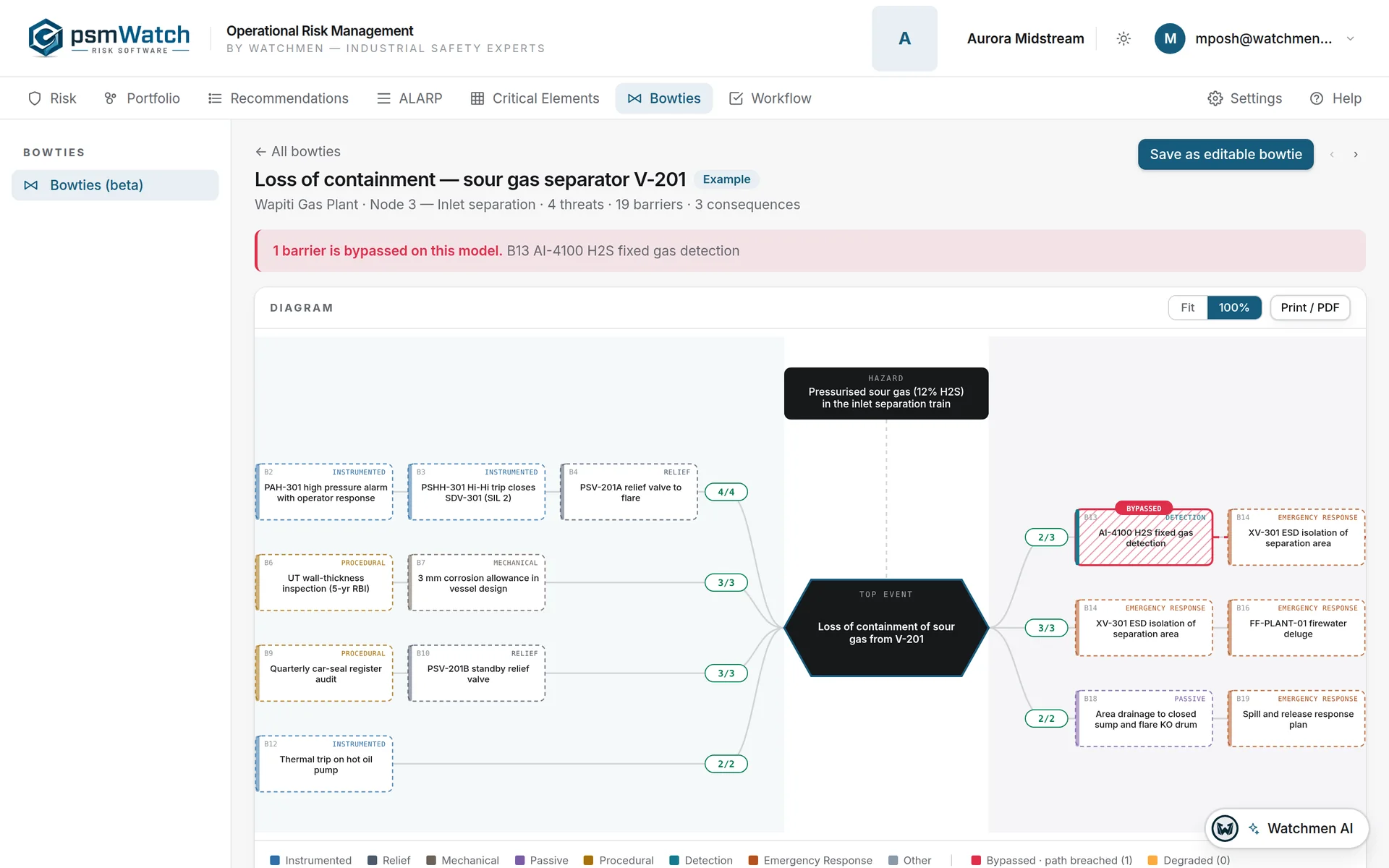
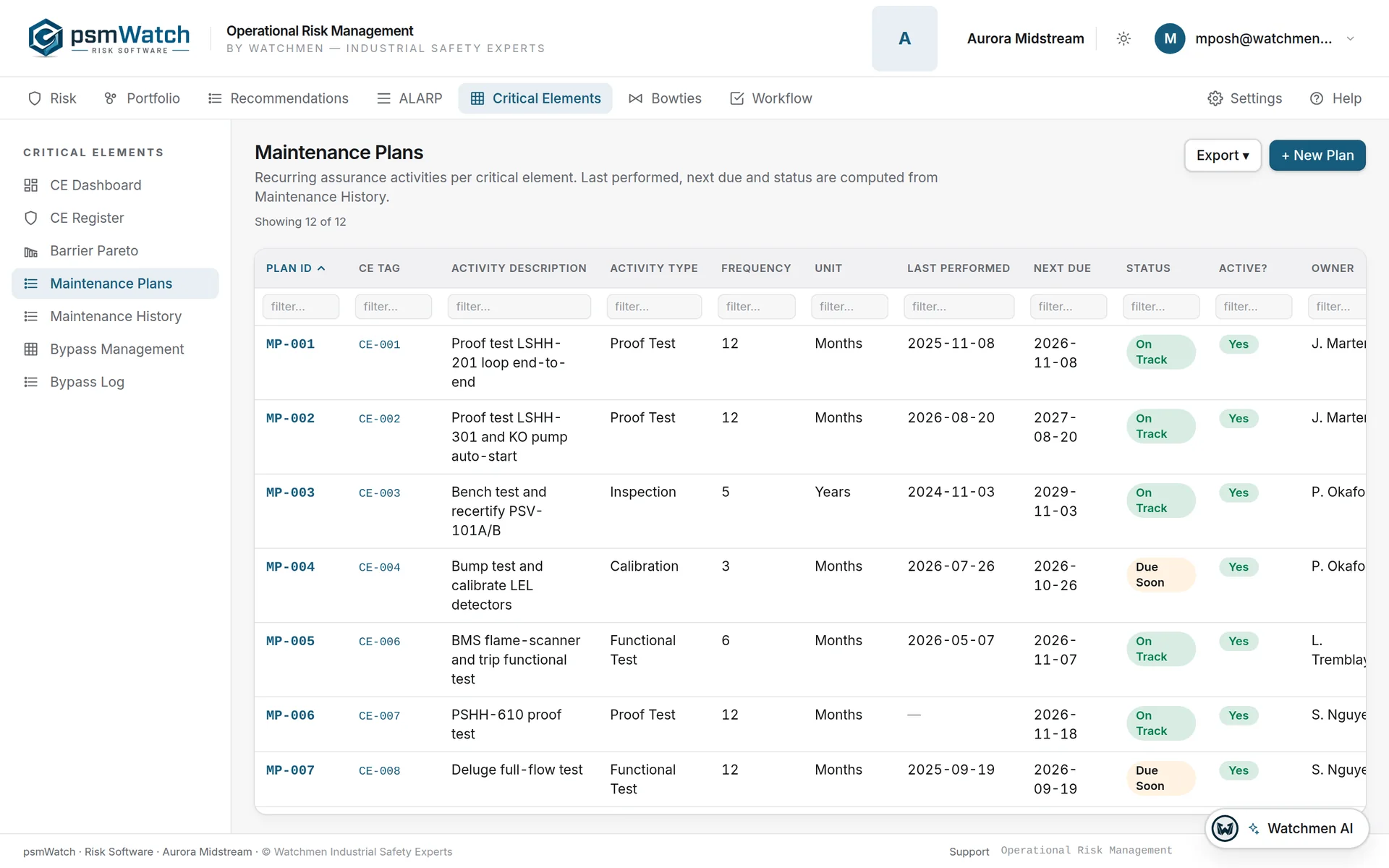
A single register for the equipment your operation depends on, safety, environmental, asset and mission-critical, with the maintenance, testing and bypass workflows to keep it dependable.

Demonstrate, and defend, that risk has been reduced As Low As Reasonably Practicable, with the evidence attached.

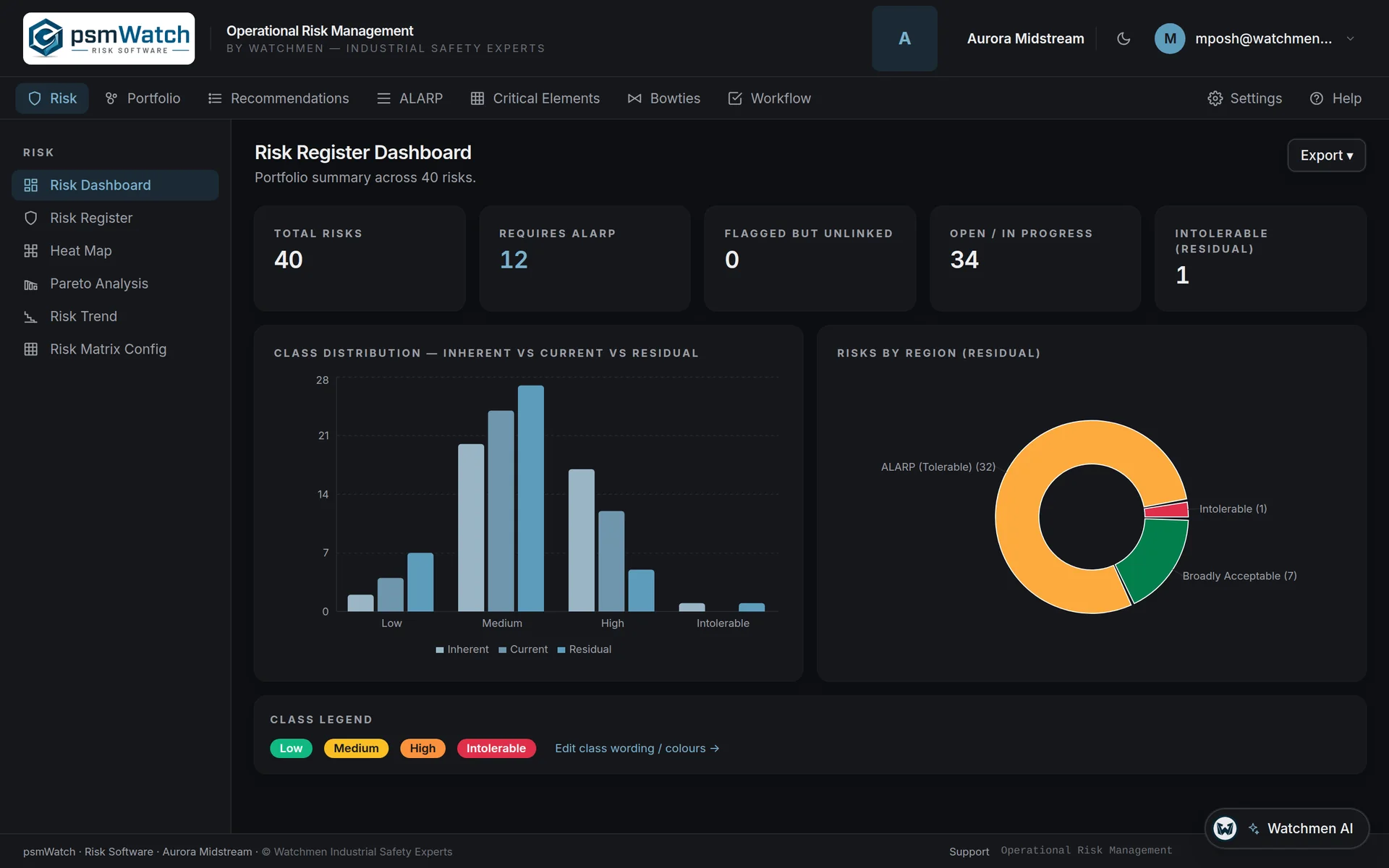
Excel, CSV and print to PDF on every register and dashboard. Light and dark themes. A layout that works on a phone at the unit.


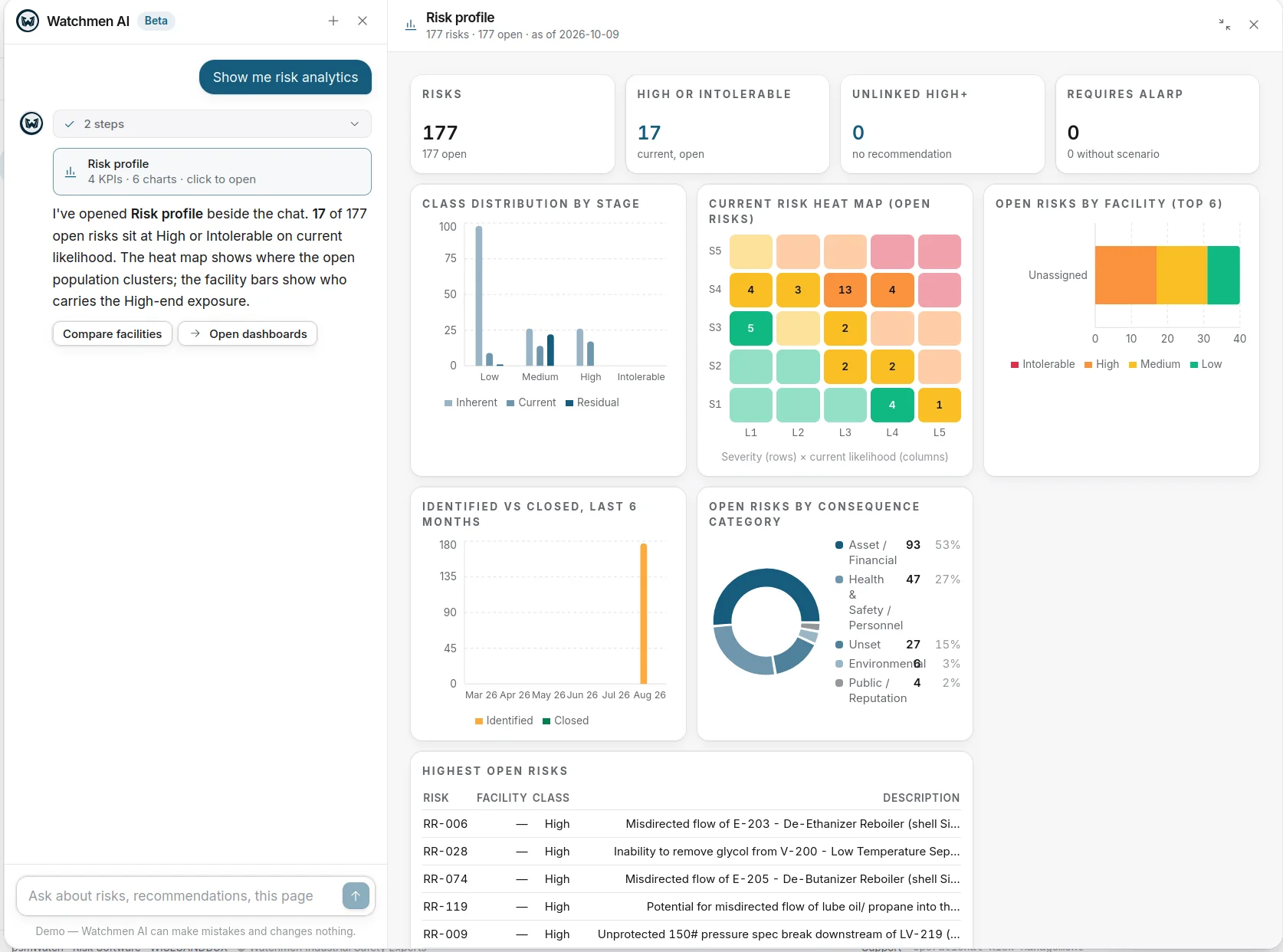
Watchmen AI reads across your connected PSM data to surface patterns, flag where risk is concentrating and point you to what matters most. Ask which high risks have no recommendation, what is overdue and for whom, which barriers are bypassed, or what is waiting for approval. It drafts reminders and recommendations for you to review and never changes a record on its own. The richer your data, the more useful it gets.
Shown in preview form today. Scope and availability will be confirmed with pilot clients.

Four modules are in production now. The next set brings the studies themselves inside psmWatchTM.
Author and manage HAZOP and What-If studies in one place, kept evergreen and live-connected to the register and the critical elements list. Until then, bring studies in from any other tool.
Layer of protection analysis in its own worksheet, linked scenario by scenario to the HAZOP and to the register.
Analytics and insight across the whole portfolio, surfacing the highest-impact risks and actions so effort goes to the right place first.
Pull control system data to detect when a critical element is bypassed, and check it against the approvals in Bypass Management.
Decompose a safety instrumented function into its sensor, logic solver and final element, each tracked as its own critical element.
A multi-tenant service where each client has a physically separate database. Hosted on Microsoft Azure with point-in-time restore, monitoring and alerting.
Password plus an emailed one-time code on every sign in, or single sign-on through your identity provider. Rate limits, token revocation, timing-safe login, strict content security headers. No client data cached in the browser.
You choose where your data is housed. Production runs in Canada Central today, with seven-day point-in-time restore. Other jurisdictions are provisioned on request.
Your risks, scenarios and records live in a dedicated PostgreSQL database. No shared tables and no cross-tenant queries, by construction.
Viewer, reviewer, editor, admin and owner, enforced by the server rather than hidden by the browser. Clear indication of who can change what.
Structured IDs link every scenario, safeguard and action back to its origin. Each change stores a before and after snapshot with who and when. Admin and platform actions land in an activity log.
PHA worksheets in from any tool. IBM Maximo for assets, PM schedules and work orders, read-only by default. Excel, CSV, Word and PDF out of every page.
Book a walkthrough and we will bring a sample of your risk data in, then show how it flows through to managed critical elements, tracked actions, ALARP justification and the analytics that drive decisions. Pilots start with a single facility and grow from there.